
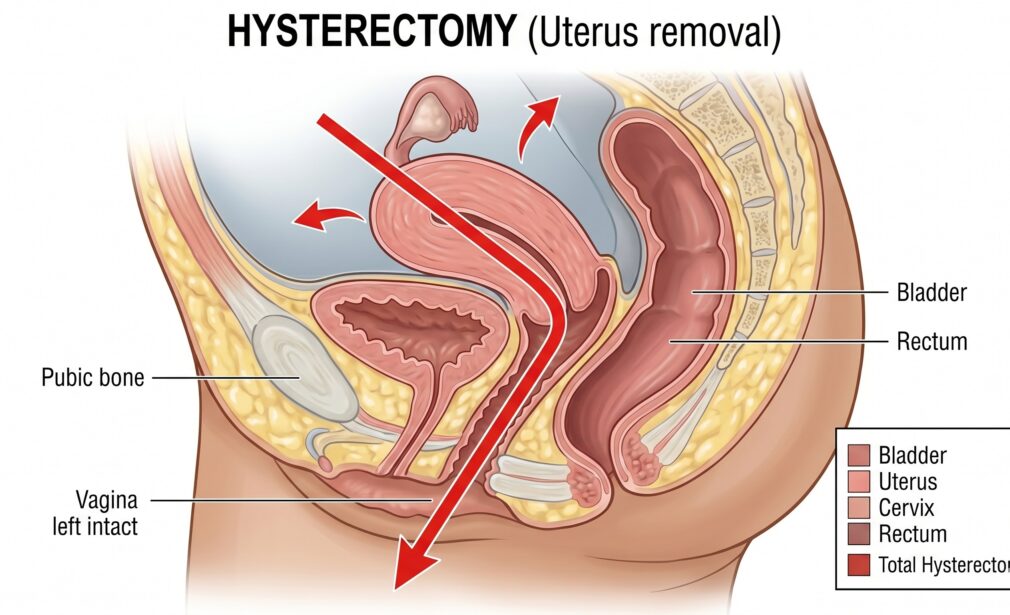
Hysterectomy (Uterus Removal)
A Hysterectomy is a major surgery to remove the uterus. It is considered a definitive treatment for conditions that have not responded to conservative management.
Types and Variations
Total Hysterectomy: Removes the entire uterus and the cervix.
Subtotal (Supracervical): Removes the upper part of the uterus but leaves the cervix intact.
Hysterectomy with Salpingo-Oophorectomy: Removal of one or both ovaries and fallopian tubes along with the uterus.
Surgical Methods
Vaginal Hysterectomy: The uterus is removed through the vaginal canal. This has the fastest recovery and no visible scars.
Laparoscopic/Robotic Hysterectomy: The uterus is detached using keyhole surgery and removed through a small vaginal or abdominal incision.
Abdominal Hysterectomy: A traditional “open” surgery used for very large tumors or suspected cancer.
Life After Hysterectomy
If the ovaries are removed, a woman will enter surgical menopause immediately. If the ovaries remain, she will not have periods but will not experience immediate menopause. Recovery typically takes 4 to 6 weeks, during which lifting heavy objects is strictly prohibited.